


Plone Midsummer Sprint was held at Jyväskylä, Finland, on 3rd–7th of July 2017. The main goal for the sprint was to polish content editors' user experience on the current Plone CMS release. While a lot was accomplished for that original goal, the final sprint topics adapted to follow the interests of its volunteering participants.
The sprint was sponsored by the University of Jyväskylä. In addition, the sprint was accepted to receive strategic funding from Plone Foundation to cover the possible travel and accommodation costs of Albert Casado, the designer of Plone 5 user interface.
This is the final report of Midsummer Sprint.

Participants
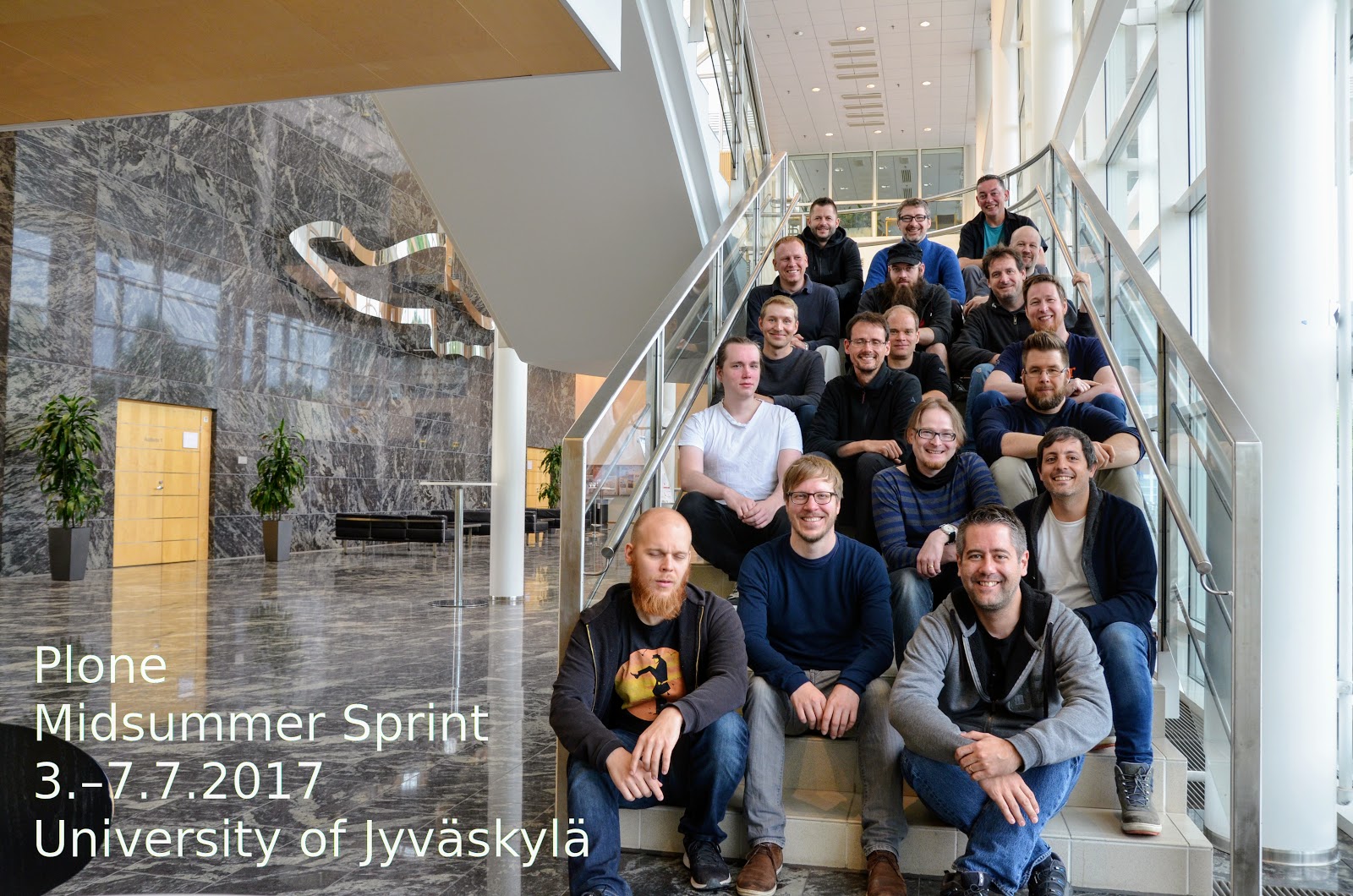
There was 18 participants at Midsummer Sprint in total. The participants included, of course, our organisers, our local development team for Plone based and related services, a GSOC student working on a Plone Foundation mentored topic, a professional UX designer and many well known names from Plone community.
Our sprint organisers:
- Asko Soukka, University of Jyväskylä
- Rikupekka Oksanen, University of Jyväskylä
Our local development team:
- Jussi Rajala, University of Jyväskylä
- Jussi Talaskivi, University of Jyväskylä
- Matti Pohjanvirta, University of Jyväskylä
- Valtteri Karppinen, University of Jyväskylä
Google Summer of Code student:
- Mikko Hursti, University of Jyväskylä
Plone community participants:
- Albert Casado, Hewlett Packard
- Alexander Loechel, Ludwig-Maximilians-Universität München
- Eric Steele
- Maik Derstappen, Derico
- Paul Roeland, Clean Clothes Campaign
- Peter Holzer, agitator Weblösungen
- Philip Bauer, Starzel.de
- Stephan Klinger, der Freitag
- Sven Strack
- Timo Stollenwerk, kitconcept GmbH
- Victor Fernández de Alba, kitconcept GmbH
Thank you for all the participants! Many of you came to Jyväskylä with members of your family, and it was our pleasure to host every one of you!
Results
According to the feedback that we got from our participants, the sprint was considered a very successful one. Maybe the sprint was unable to fix as many content editing related issues as we were hoping for, but it definitely managed to get the best out of its participants:
At first, thanks to this sprint, all members of our local Plone development team at IT Services of University of Jyväskylä got to learn how Plone is being developed. They got their contributor agreements submitted to be able to push their patches to upstream, they learned how those patches were made, tested and reviewed in practice, and they got to know many experienced Plone developers in person. Of course, they also got to feel the spirit of an international open source development sprint, from the community with probably the longest continuing tradition on it.
The same was true for Mikko Hursti, a local student attending the sprint while working on a Google Summer of Code project for Plone Foundation. This year only four students from Finland were accepted for Google Summer of Code program. Mikko's project is about implementing a drag and drop user interface for customising content listings on Plone.
During the sprint, our local development team mainly focused on confirming and fixing the issues reported for PloneFormGen on Plone 5. PloneFormGen is the most famous form builder for Plone, used by most of the content editors at our university. Also, its unrivalled flexibility really showcases many of the unique features of Plone CMS. Before the end of the sprint, Jussi Rajala and Valtteri Karppinen submitted at least four related pull requests for it and got very familiar with the large code base in question. Not bad at all for their first sprint.
- https://github.com/plone/Products.Archetypes/pull/93
- https://github.com/plone/Products.Archetypes/pull/94
- https://github.com/smcmahon/Products.PloneFormGen/pull/199
- https://github.com/smcmahon/Products.PloneFormGen/pull/200
Security is one of the most advertised features of Plone CMS. What makes it particularly great feature is that content editors don't really need to know or think about it. It just works. Maik Derstappen made spectacular work at the sprint by cleaning up and fixing the code base for a major security feature of Plone called safe HTML transform. It's a configurable HTML filter, which prevents content editors from accidentally (or with malicious objectives) introducing security issues in their edits. Maik's work guarantees that the feature really works as advertised also on Plone 5. With the new synchronised configuration, it also works better than ever with TinyMCE, the WYSIWYG HTML editor used on Plone.
- https://github.com/plone/Products.CMFPlone/pull/2098
- https://github.com/plone/Products.PortalTransforms/pull/20
- https://github.com/plone/plone.outputfilters/pull/25
The latest major Plone release, Plone 5, introduced a completely redesigned content management toolbar for all logged-in users. But not all logged-in Plone users are content editors, and when they are not, the new toolbar could a distraction. At the sprint, Peter Holzer continued on earlier work by Jens Klein and introduced Show Toolbar -permission to control when the full toolbar is shown, and an alternative member tools -dropdown menu to show a minimal set of required actions (including logout) for logged-in users when the real toolbar is not shown. The default behaviour, of course, remains unchanged.
- https://github.com/plone/plonetheme.barceloneta/pull/131
- https://github.com/plone/Products.CMFPlone/pull/2096
- https://github.com/plone/Products.CMFPlone/pull/2100
- https://github.com/plone/plone.app.upgrade/pull/127
- https://github.com/plone/plone.app.layout/pull/128
Plone 5 was also the first Plone CMS release to ship with a complete multilingual content support. With the bundled Multilingual Support -add-on enabled, Plone supports easy-to-use one-to-one translation of each content page for any language. In addition to fixing some reported issues in it, Peter Holzer and Asko Soukka redesigned its key user interface element, Translate-menu on the toolbar, to be much simpler and more consistent with the other menus in Plone's editing toolbar. With the redesigned Translate-menu soon in place, we really expect to see a good drop in translation related support requests that we currently receive from our content editors.
- https://github.com/plone/plone.app.drafts/pull/6
- https://github.com/plone/plone.app.multilingual/pull/283
- https://github.com/plone/plone.app.multilingual/pull/284
- https://github.com/plone/plone.app.multilingual/pull/285
Plone provides, and has always provided, readable and meaningful web addresses for any content stored on it. Even better, it's really easy to content around on Plone. But what happens to those old web addresses when content gets moved? Correct. Of course Plone keeps track of moved content and maintains a redirection table for them. Unfortunately, until now, the redirection table has been invisible for Plone web masters. Luckily, Stephan Klinger championed to implement the PLIP for adding the missing redirection management UI for Plone, based on the existing (but lacking) RedirectionTool add-on. While Stephan made the most of the work, Asko helped him by implementing paging and filtering for the new redirection management control panel.

Our farthest participant was Eric Steel, the Plone release manager, who came to the sprint all the way from the United States. Eric started his sprint by releasing the latest beta of Plone 5.1 for developers, but then, together with Philip Bauer, completed the long-awaited refactoring of Plone login forms. The current login forms used in Plone 5 are relying on a form framework, which is no longer used anywhere else in Plone. Upgrading Plone login forms to use the current form frameworks in Plone has been one of many prerequisites for upgrading Plone to Python 3. It's just awesome that this has finally been done, and we cannot wait for being able to customise Plone login forms in a more sustainable way now. In addition, Philip did also fix a few known issues in the in-place content migration from Plone 4 to Plone 5.
- https://github.com/plone/Products.CMFPlone/issues/2092
- https://github.com/plone/plone.login/commits/master
- https://github.com/plone/plone.app.contenttypes/pull/413
A lots and lots of work was also done to enhance the official Plone documentation at the sprint. To really get an idea, how Plone documentation applies traditional CI practices to ensure high quality documentation, we really recommend watching the presentation that Sven Strack gave us at the sprint. Sven Strack, Paul Roeland and Alexander Loechel worked at least for better tools for building and testing the documentation, better theme for the upcoming Plone 5.1 documentation, better readability of the docs on mobile devices, refactoring robot generated screenshots (helped also by Asko), documentation on developing better documentation for contributing the docs itself and probably much more. In addition, Paul also fixed a few reported accessibility issues on Plone 5 and tested Asko's approach for building Plone themes with Webpack. Alexander used some of his sprint time to mentor his GSOC student Pavithira KC on implementing new add-ons listing for plone.org.
- https://github.com/plone/sphinxtheme.plone/commits/master
- https://github.com/plone/documentation/commits/5.1
- https://github.com/plone/Products.CMFPlone/commits/robodoc
- https://github.com/plone/Products.CMFPlone/issues/1619
- https://github.com/plone/Products.CMFPlone/pull/2089
- https://github.com/plone/plone.app.layout/pull/126
- https://github.com/plone/plonetheme.barceloneta/pull/130
Other interesting developments at the sprint included Maik implementing sub-templates into bobtemplates.plone, Alexander adding tox based test setup into bobtemplates.plone and Jussi Talaskivi enhancing plone.docker. Once Maik's enhancements for Plone add-on templates at bobtemplates.plone are available, they will allow to make significantly cleaner initial templates and provide sub-template based scaffolding throughout the add-on lifetime. Alexander's examples for tox based test setups pave the way for testing add-ons easily on both Python 2 and Python 3. Jussi clarified documentation on using Plone Docker images (also as a cluster), investigated into slimming Plone Docker images and then researched the remaining issues in installing Plone with pip, the official Python package installer.
- https://github.com/plone/bobtemplates.plone/pull/206
- https://github.com/plone/plone.docker/issues/69
- https://github.com/plone/plone.docker/issues/70
Finally, there was the dream team of Albert Casado, Victor Fernández de Alba and Timo Stollenwerk working on a new CMS user interface and user experience concept called Pastanaga UI. If something makes this project special, it's the team. Timo is expert on test driven development, and experienced Plone entrepreneur, who really knows the challenges on the current CMS market. Victor is expert on Plone as enterprise CMS. He has authored a book on using Plone for intranets, and has managed many hundreds of Plone sites during his prior position at Universitat Politècnica de Cataluny. Albert, of course, is best known for his design of the current Plone 5 default theme called Barceloneta. And the best part: they all have successfully worked together before.
At the sprint, Albert completed many of his earlier designs for Pastanaga UI components and composed a visual style guide to help with the reference implementation and later adaptations. Thanks for Alberts prior experience on Plone, Pastanaga UI simplifies many Plone key features to be easier to use than ever, especially on mobile. All this his available on request until the reference implementation has been completed. Victor and Timo supplemented Albert's work by bootstrapping a ReactJS based reference implementation of the design. Their goal is to complete Plone REST API compatible minimal viable product with the new UI soon, and attract resources for a more complete implementation later. Since the first implementations will be fully JavaScript based, it not yet sure, if Pastanaga UI would be adaptable for the current Plone UI.
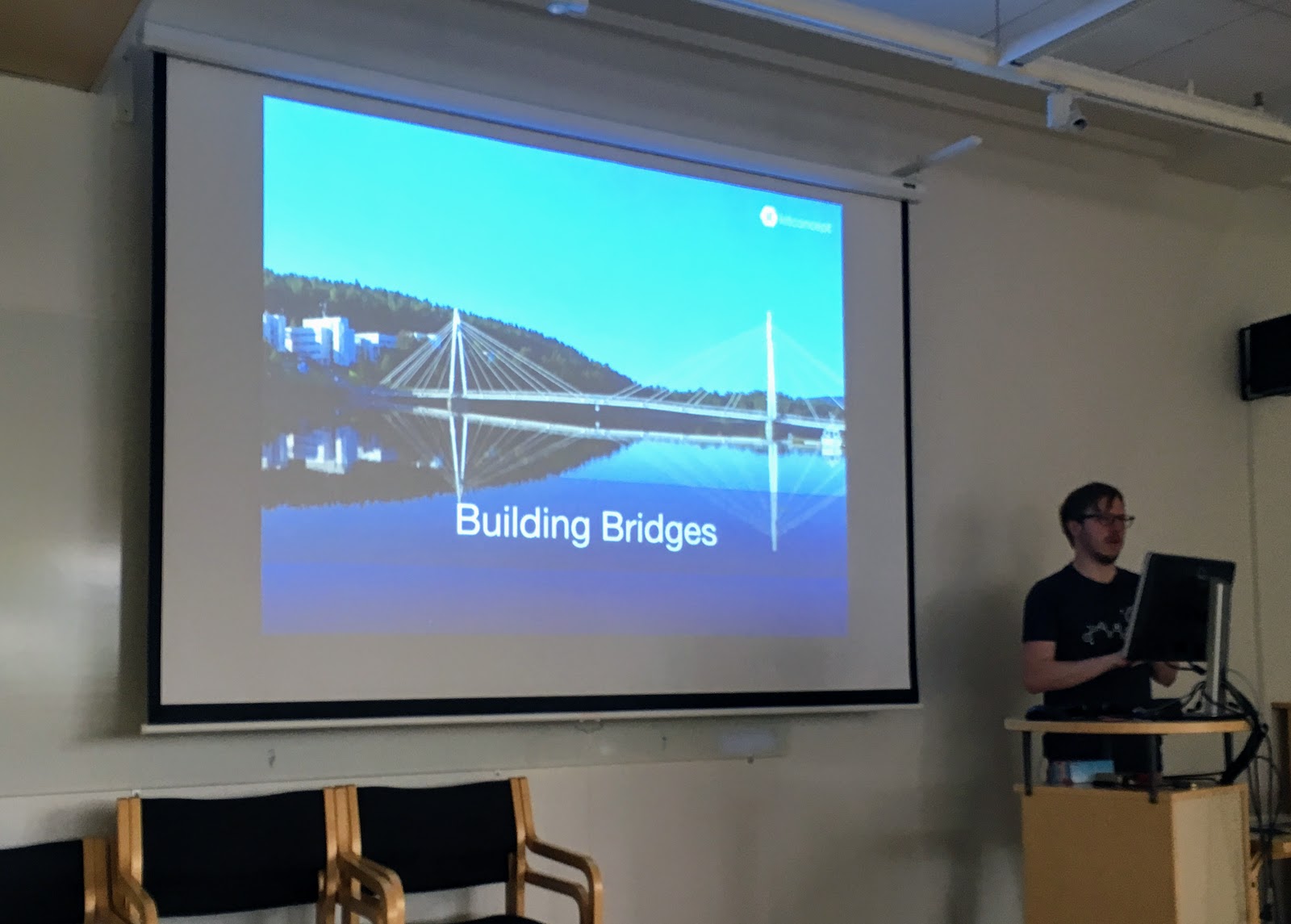
Many of our sprint days started with a presentation on some of the sprinted or otherwise current topics, including a presentation on Pastanaga UI by Timo and Albert. Recordings of those presentations are now publicly available on our Plone based video publishing platform Moniviestin.
Program
While the code is important, Plone sprints are also about the people, who participate them. Plone community has a long tradition for dining or just hanging around together after those very intensive work days, and Midsummer Sprint did not make an exception. We also tried our best to take account that many of the participants travelled with their families.
Most of us dined together every day from Sunday evening to Friday evening. While many of the participants were still arriving on Sunday, we dined at Restaurant Shalimar inside the train station, to be able to welcome travelling participants and their families as they arrived.
In the Monday evening we dined at Restaurant Sohwi, which has always been popular place among the students and staff of our university due to its close proximity to our main campus areas.
On Tuesday, we wrapped up the day a bit earlier than usual and took a guided tour at Alvar Aalto museum (tour being sponsored by the university) to learn and get inspired by Aalto's design. In the evening, we walked a short forest trail at Haukanniemi together, and experienced a beautiful and warm sunset while enjoying a traditional Finnish camp fire with Finnish sausages (and surprisingly without mosquitoes).

In the Wednesday evening we dined together at viking restaurant Harald, where it was possible to enjoy many Finnish delicacies including reindeer, gravlax, Scandinavian rye and malt bread, lingonberries and cheese bread with cloudberries. We were lucky enough to catch the summer discount of the restaurant to make that evening a bit more affordable.

On Thursday, we organised a traditional Finnish sauna evening with street food at Opinkivi Sauna, a private sauna apartment owned by The Student Union of the University of Jyväskylä. Two separate dressing rooms and saunas at Opinkivi Sauna ensured that everyone was able to enjoy Finnish sauna in comfort.
And finally, in the Friday evening, we ended the sprint with the remaining participants by dining together at restaurant Trattoria Aukio, near the harbour of Jyväskylä, and then, said the goodbyes.
Thank you all, and see you soon!


